
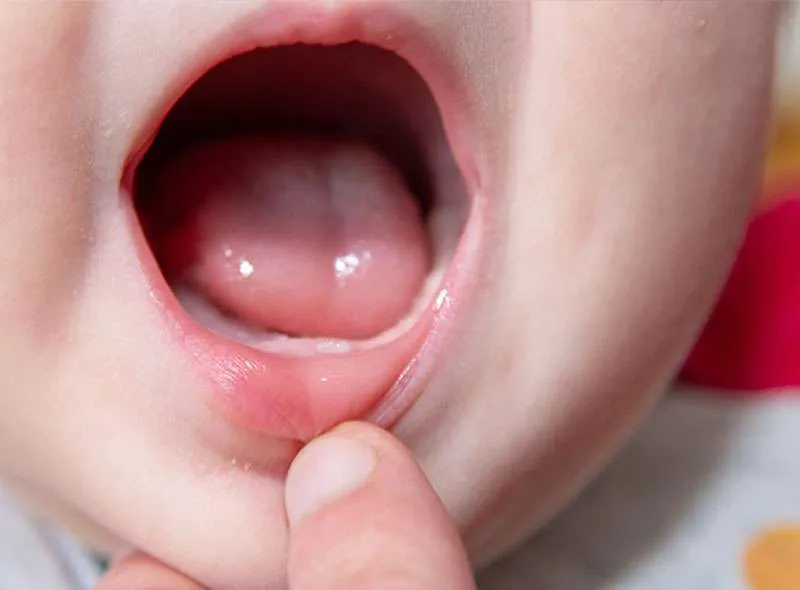
What Is a Lip Tie and Why Does It Matter for Your Baby?
A lip tie occurs when the frenulum, the small band of tissue connecting your baby’s upper lip to the gum, is too thick, tight, or short. This restriction prevents the upper lip from flanging outward properly, making it difficult for babies to create the seal needed for effective breastfeeding. It’s more common than most parents realize, and when lip tie surgery is needed, a pediatric dentist can evaluate your infant and help your family understand the available options.
Because young patients with lip ties can’t maintain a proper latch, they often swallow excess air during feeding. That leads to increased gas, colic symptoms, and reflux. Many infants with lip ties struggle to gain weight at a healthy pace, even when feeding frequently. For nursing mothers, the shallow latch caused by a lip tie often results in cracked or blistered nipples, turning what should be a bonding experience into a source of frustration.
Pediatric dentists classify lip ties into four categories based on severity. Class I and II ties attach lower on the gum and may cause fewer problems. Class III and IV ties attach closer to the gum ridge or extend into the palate, typically causing more significant feeding difficulties. During a simple oral exam, a pediatric dentist can assess your baby’s frenulum, observe feeding patterns, and determine whether the restriction warrants treatment. Early identification gives families more time to weigh their options and plan next steps.
How Lip Tie Surgery Works: The Laser Frenectomy Procedure
Board-certified pediatric dentists perform frenectomy procedures using a soft-tissue laser. The laser gently releases the restrictive tissue, allowing the lip to move freely. The entire process typically takes less than five minutes from start to finish. Your pediatric dental team will walk you through every step so you know exactly what to expect.
Here’s what happens during a laser frenectomy:
- Assessment and preparation. The dentist examines your baby’s lip tie and discusses the procedure with you.
- Topical numbing. A small amount of topical anesthetic is applied to minimize any discomfort.
- Laser release. The soft-tissue laser precisely releases the frenulum in a matter of seconds.
- Immediate feeding. Your baby can breastfeed right away, which also helps soothe them.
- Aftercare instruction. You’ll receive guidance on post-procedure stretches to support healing.
The laser cauterizes the tissue as it works, which means minimal bleeding and no need for stitches. Most babies fuss briefly during the procedure but calm quickly once they begin nursing. Pediatric dental specialists trained in laser frenectomy can target only the restrictive tissue, leaving surrounding areas untouched.
Post-procedure stretches are a critical part of the process. Without them, the tissue can reattach as it heals, potentially recreating the restriction. Your dental team will demonstrate exactly how to perform these gentle stretches and explain how often to do them during the healing period.
Key Benefits of Lip Tie Surgery for Babies and Parents
Many parents notice improvements within the first few days after the procedure, and the positive effects tend to build over the weeks that follow.
How Does Lip Tie Surgery Help Your Baby?
Releasing a lip tie can make a real difference in your baby’s feeding and growth:
- A deeper, more effective latch that allows better milk transfer
- Less gas. Less colic. Fewer fussy evenings.
- Weight gain often improves as feeding becomes more efficient
- Proper oral development gets the support it needs, including future speech patterns
How Does Lip Tie Release Benefit Nursing Mothers?
Mothers often feel the difference just as quickly:
- Relief from nipple cracking and damage caused by a shallow latch
- Shorter feeding sessions as milk transfer improves, which means less exhaustion
- Lower risk of mastitis and other complications from ineffective milk removal
- Less frustration and anxiety around breastfeeding overall
Pediatric dental professionals generally agree that early intervention for oral restrictions supports infant nutrition and breastfeeding success.
Laser Frenectomy vs. Traditional Lip Tie Surgery: What’s the Difference?
Parents often ask how laser frenectomy compares to traditional surgical methods. Here’s a clear look at how the two approaches differ so you can decide what’s right for your baby.
| Factor | Laser Frenectomy | Traditional Surgery (Scissors/Scalpel) |
|---|---|---|
| Precision | Highly precise; targets only restrictive tissue | Less precise; may affect surrounding tissue |
| Bleeding | Minimal; laser cauterizes as it cuts | More bleeding; may require pressure or sutures |
| Anesthesia | Topical numbing; rarely needs general anesthesia | May require general anesthesia for infants |
| Procedure Time | Under 5 minutes in most cases | Typically longer |
| Recovery | Most babies heal within 1 to 2 weeks based on clinical experience | Recovery period may be longer depending on technique used |
| Stitches | None required | Sometimes necessary |
| Post-Op Feeding | Baby can nurse immediately | May need to wait |
Pediatric dentists trained in laser frenectomy prefer this approach because it works well for infants. The laser is precise, there’s very little bleeding, and recovery is quick. For these reasons, it’s the standard method for releasing lip ties in young patients at most pediatric dental practices.
How Much Does Lip Tie Surgery Cost?
Cost varies based on your baby’s specific needs, and your pediatric dental team will give you a clear estimate at your consultation. Factors that affect pricing include the severity of the restriction, whether your baby also has a tongue tie, and your insurance coverage.
Insurance and payment considerations:
- Some dental insurance plans cover frenectomy procedures, particularly when medical necessity is documented
- Medical insurance may also provide coverage when the procedure addresses feeding difficulties
- FSA (Flexible Spending Accounts) and HSA (Health Savings Accounts) can often be used for lip tie surgery
- Your dental team can help you understand your coverage options and work through the insurance process
If you have questions about what your plan covers, most practices are happy to check your benefits before your visit.
Is Your Baby a Candidate for Lip Tie Surgery?
Your baby may benefit from lip tie surgery if the restriction is causing functional feeding problems. A visible lip tie doesn’t always mean surgery is the right call. What matters is whether the tie is actually interfering with feeding or growth. Here are signs to watch for:
- Difficulty latching. Your baby struggles to latch or can’t stay latched during feeding
- Clicking sounds while nursing, or smacking noises that indicate a broken seal
- Milk dribbling from the corners of your baby’s mouth during feeding
- Slow weight gain despite frequent feedings
- Prolonged feeding sessions with little milk transfer
- Excessive drooling, even during feeding (more than what’s typical for your baby’s age)
- Visible thick or tight tissue connecting the upper lip to the gum
If you notice several of these signs, a pediatric dentist evaluation can confirm whether lip tie surgery is recommended. Pediatric dental teams with specialized training in identifying and treating oral restrictions in infants can give you a clear answer and walk you through what to expect.
Frequently Asked Questions About Lip Tie Surgery
Is laser frenectomy comfortable for babies?
Most babies experience minimal discomfort during a laser frenectomy. The procedure itself takes just seconds, and topical numbing helps reduce sensation. It’s quick. Many babies calm down right away once they begin nursing after the release. Some fussiness during aftercare stretches is normal, but it typically decreases as healing progresses.
How long does recovery take?
Most babies heal within one to two weeks following laser frenectomy. The treatment site may appear white or yellowish during healing, which is normal and expected. Consistent aftercare stretches help the tissue heal properly and prevent reattachment. Many parents notice feeding improvements within the first few days after treatment.
At what age should lip tie be treated?
Lip tie can be treated as early as a few days old if feeding difficulties are present. Early treatment often leads to quicker adaptation since babies haven’t developed compensatory feeding habits yet. Older infants and even toddlers can also benefit from frenectomy when lip tie affects feeding, speech development, or oral health. Your pediatric dental team can help you determine the right timing based on your child’s specific situation.
Can a lip tie reattach after surgery?
Reattachment is possible if aftercare stretches aren’t performed consistently. The tissue naturally wants to heal back together, so gentle stretches several times daily help keep the release open while new tissue forms. Your pediatric dental team will provide detailed instructions and demonstrate proper technique before you leave the practice.
What is the difference between a lip tie and a tongue tie?
Both conditions involve restricted frenulum tissue, but they affect different areas. A lip tie restricts the upper lip’s movement, while a tongue tie (ankyloglossia) restricts the tongue’s range of motion. They can show up together, and laser frenectomy treats both, so it’s worth having a pediatric dentist check for both conditions at the same time.